Analysis on progressive collapse may be carried out by the following methods
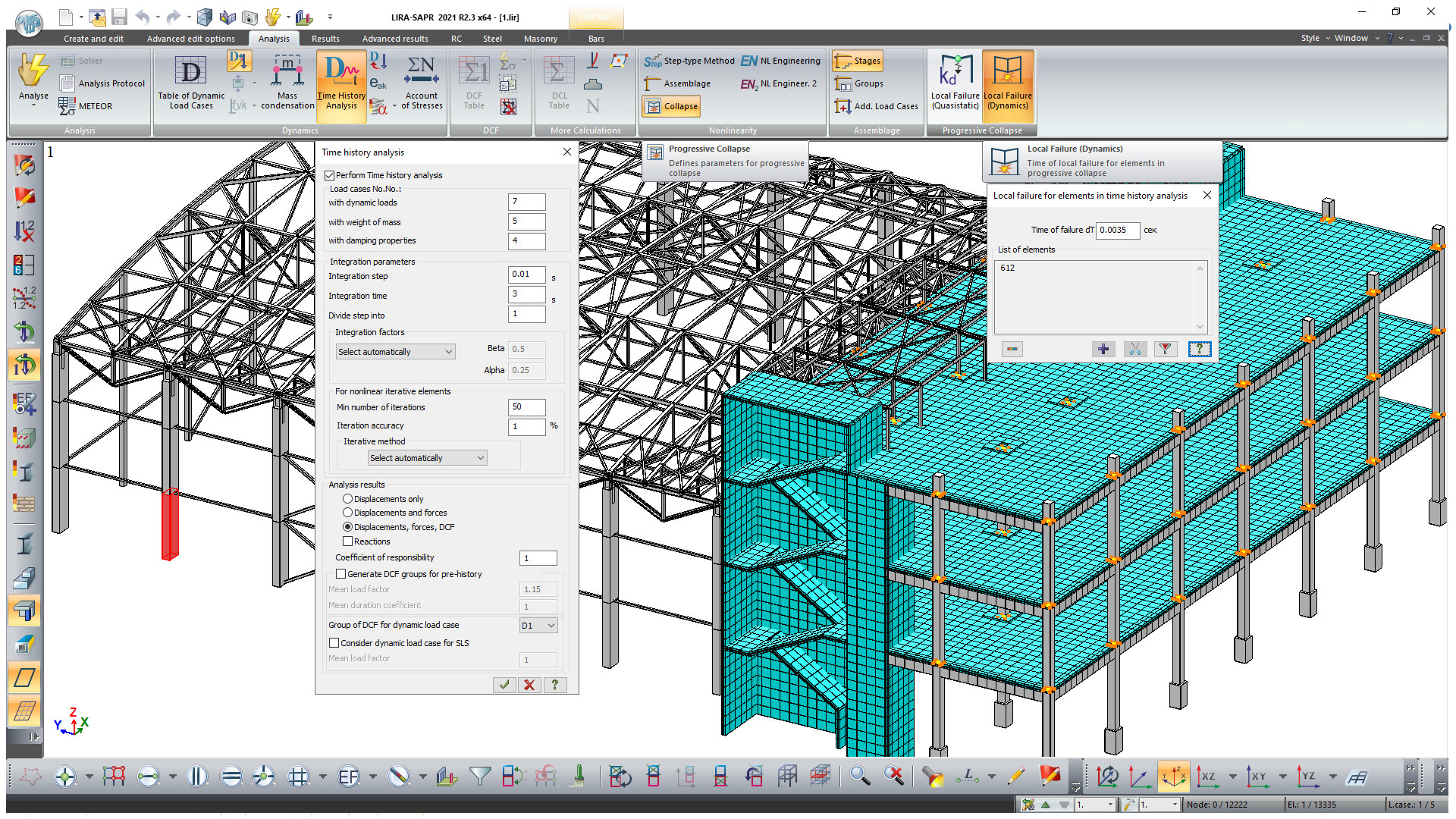
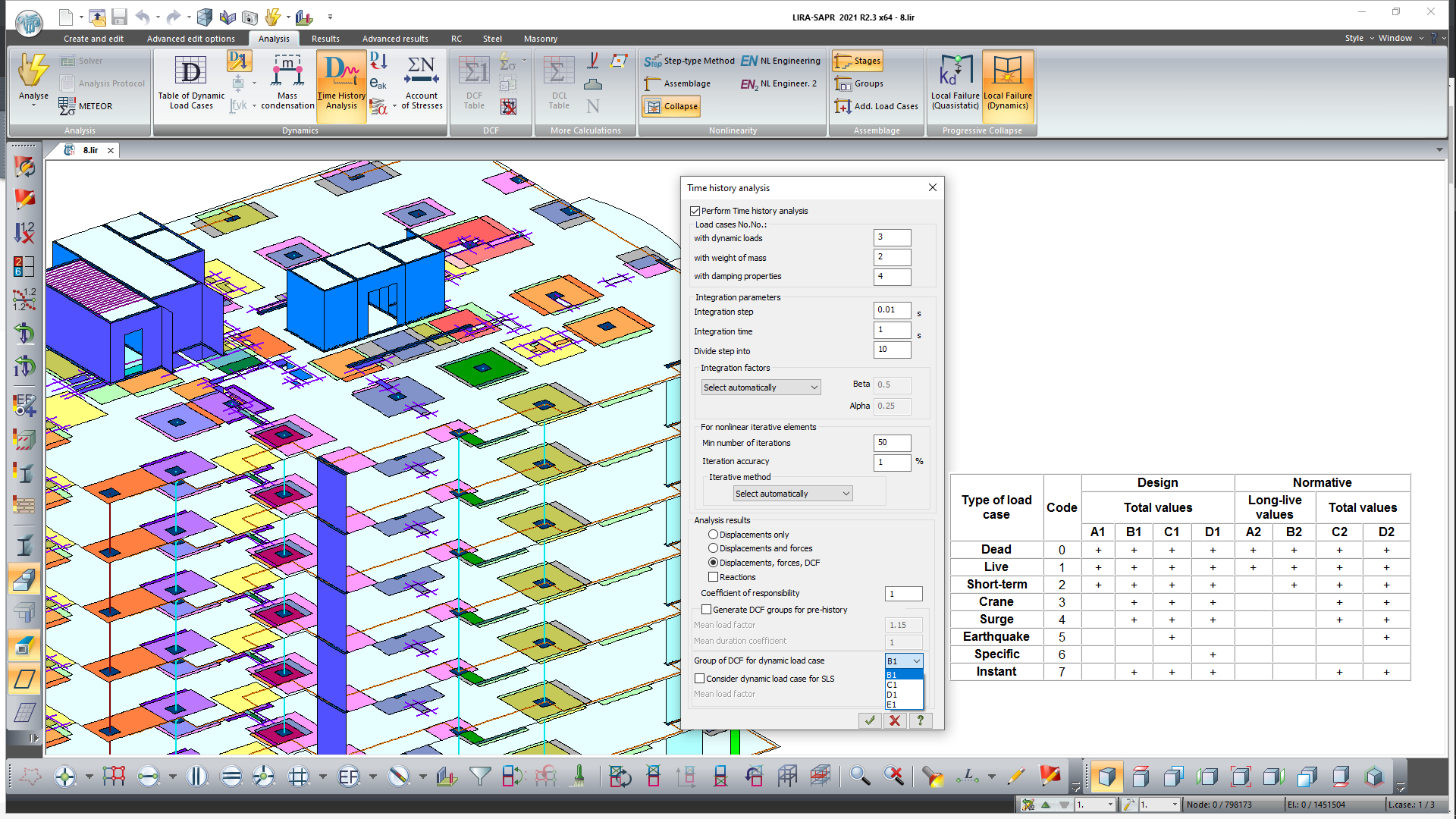
For analysis on progressive collapse, loads are defined as normative long-term ones. To replace design loads with normative long-term ones, it is possible to indicate the coefficient for load at each stage of construction. So, there is no need to define the loads once again.
For dynamic statement, DCF combinations are generated automatically:
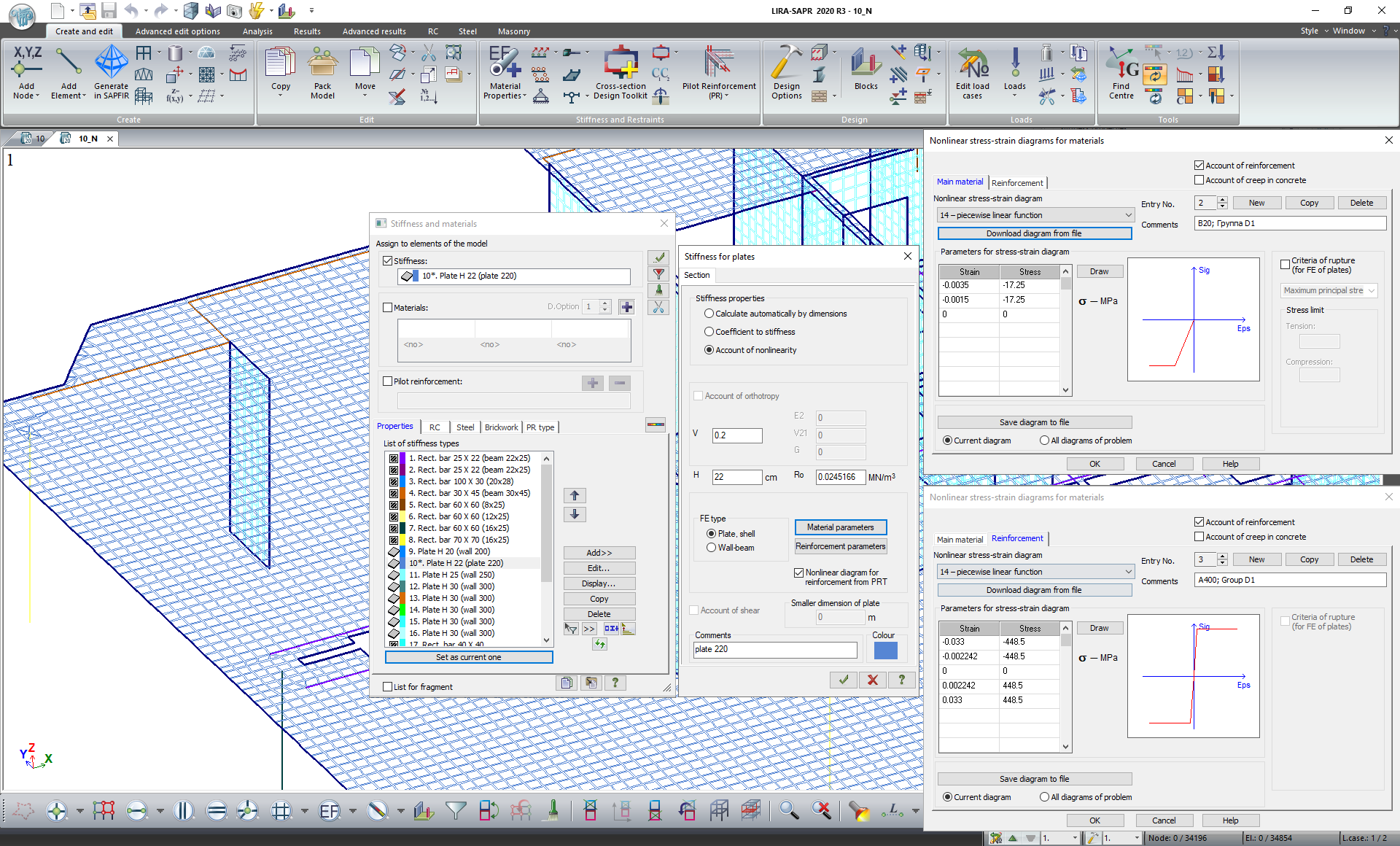
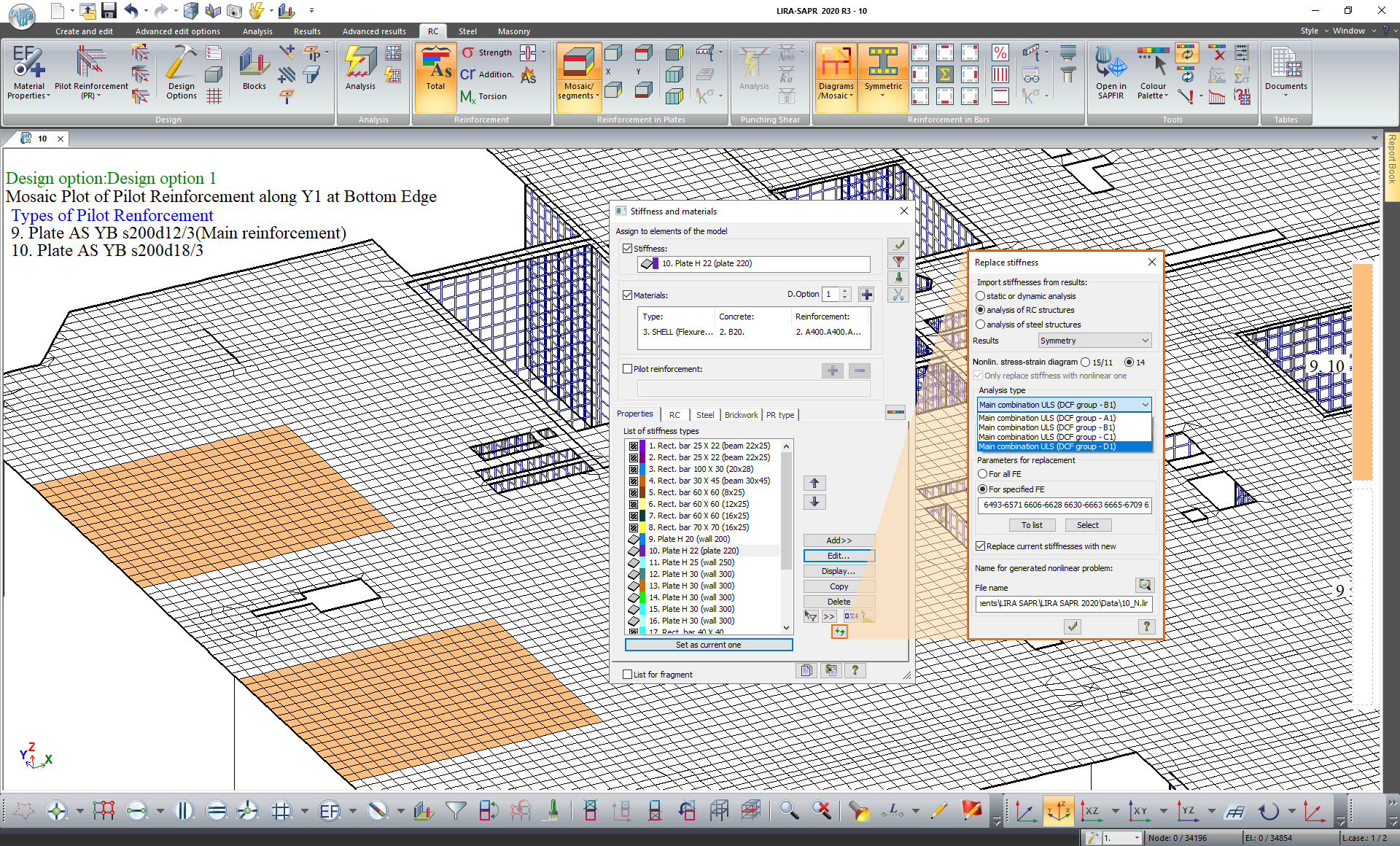
Nonlinear diagrams for behaviour of materials may be generated automatically according to analysis results of linear problem taking into account the selected type of analysis (by DCF group) and the type of [_No._] of nonlinear stress-strain diagram. For analysis on progressive collapse, it will be group D1 - a specific combination (without earthquake). To do this, the normative properties of materials, the specified additional partial safety factors and ultimate strain will be taken into account when the diagram is generated.
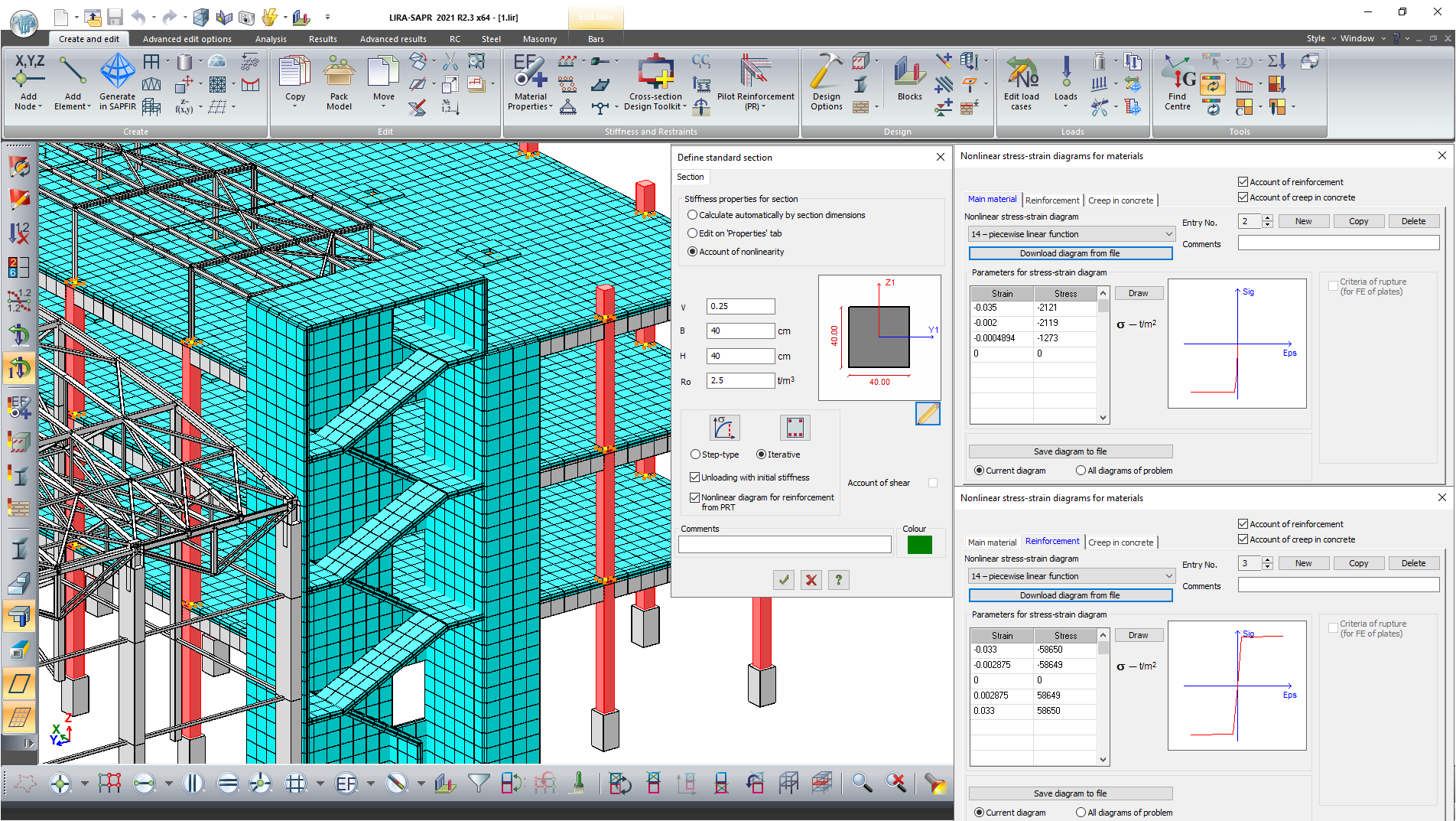
Analysis may be performed with account of physical (plasticity, creep, etc.), geometric, genetic (erection sequence) and structural nonlinearities. Different types of nonlinearity applied in analysis on progressive collapse enable you to take into account some factors of the structures’ behaviour and obtain the correct forces in its elements (especially with account of such extreme impact, when in comparison with the operation mode, behaviour of the structures changes significantly).
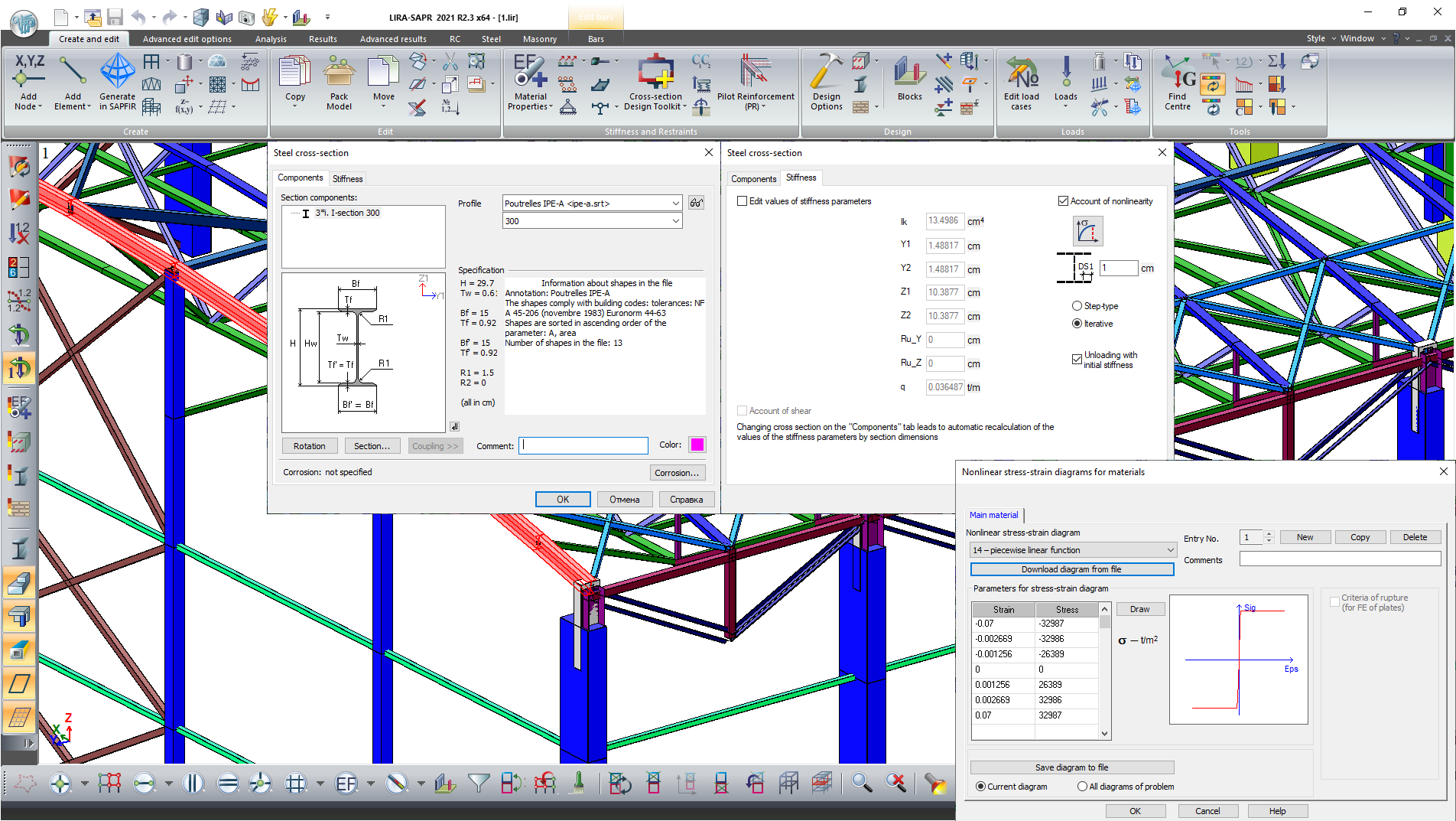
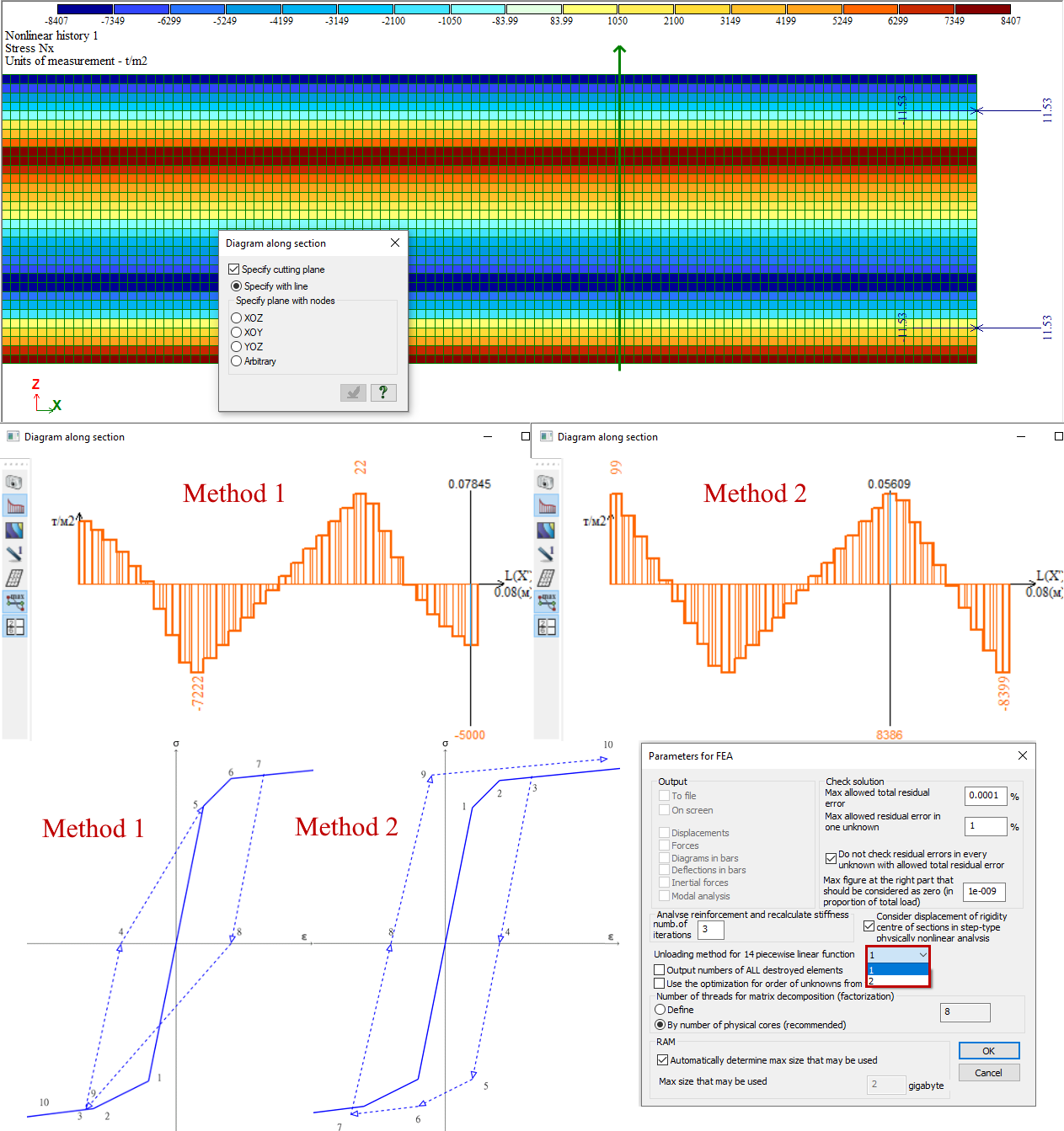
Iterative physically nonlinear FE (bar, plate and solid) with account of the unloading simulate the elastic-plastic behaviour of material and may be used for both static and dynamic analyses. It is very important to apply iterative physically nonlinear FEs in analysis on earthquake and on progressive collapse. If plastic behaviour of structures is considered, it will significantly increase the efficiency of design solutions. 2 methods of unloading are implemented: method 1 - pico-oriented hysteresis model, method 2 - model with isotropic hardening. Accounting of the plastic behaviour of materials, unloading according to the initial modulus of elasticity.
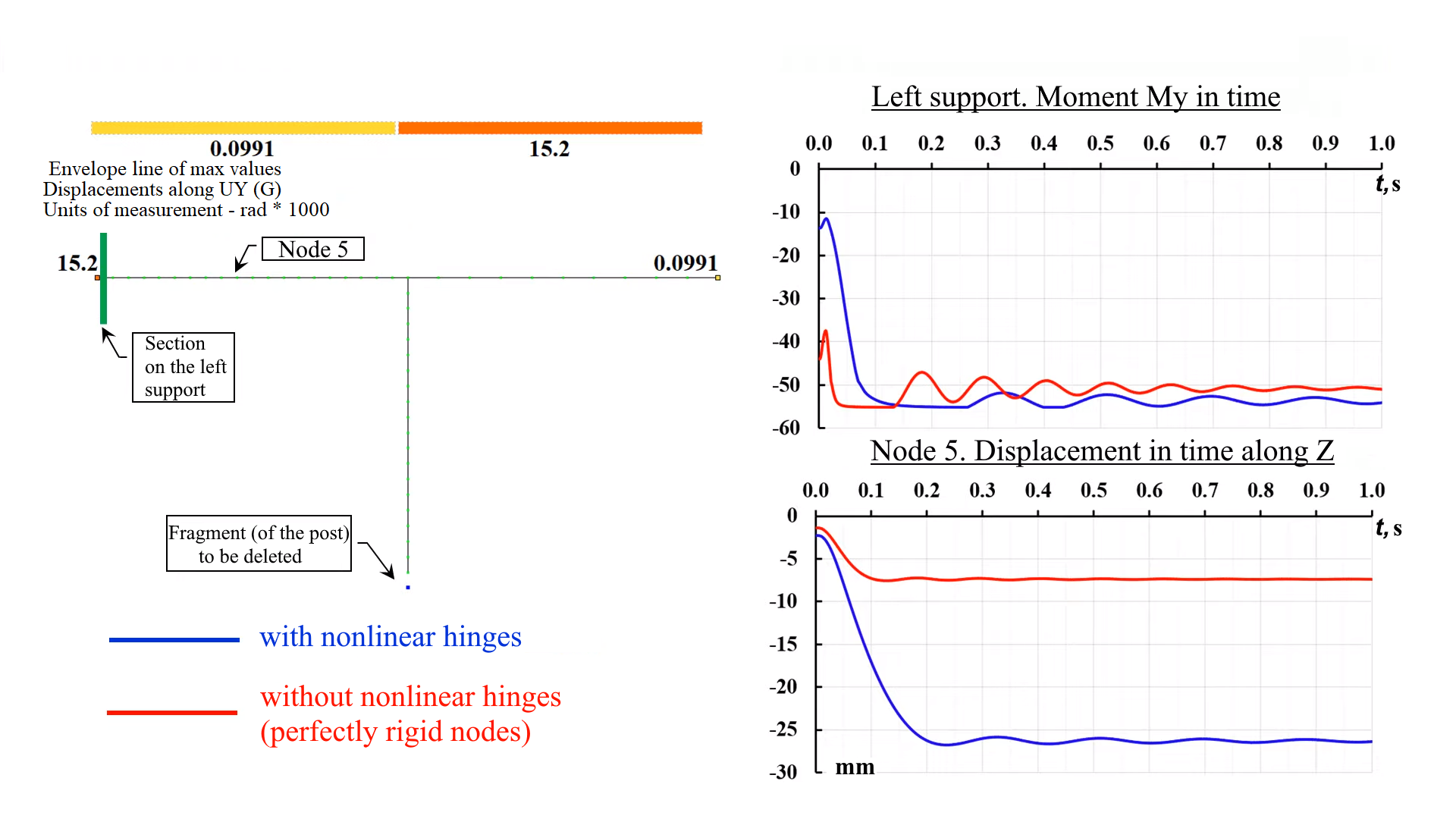
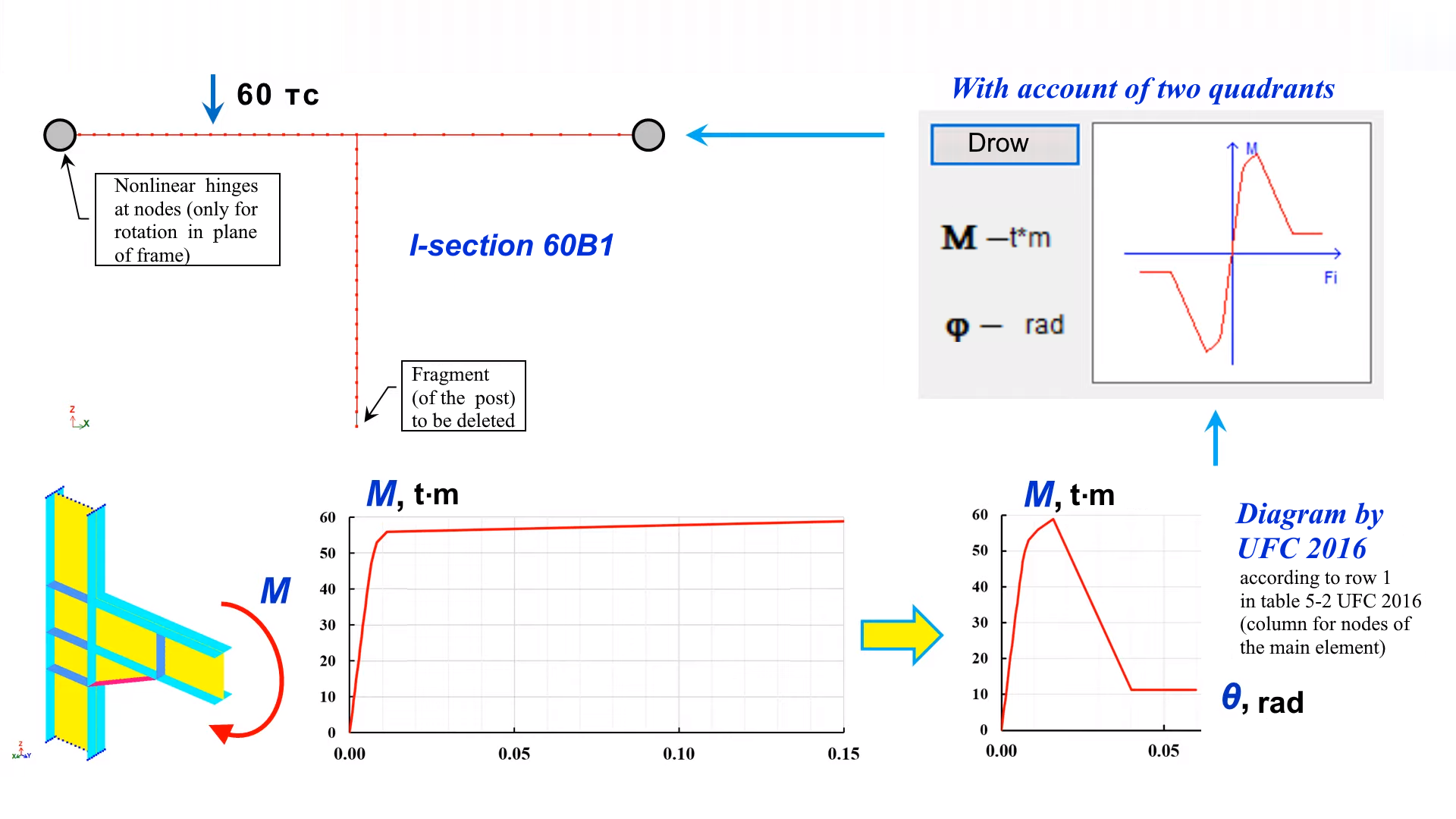
FE 295, 296 (one-, two-node) enable you to simulate nonlinear hinges (FE with arbitrary piecewise linear diagram); for each direction of behaviour, its own diagram is defined. Loading and unloading paths 'Basic rules for peak-oriented hysteretic model'. These FEs may be used in analysis of bar structures on ultimate equilibrium. Analysis on ultimate equilibrium is taken to mean nonlinear analysis of structures that will enable you to simulate the behaviour of structures under various types of loads caused by an earthquake, progressive collapse, etc. Nonlinear hinges are considered as independent nonlinear joints in direction of each DOF in the section, i.e. interaction between different degrees of freedom is ignored.
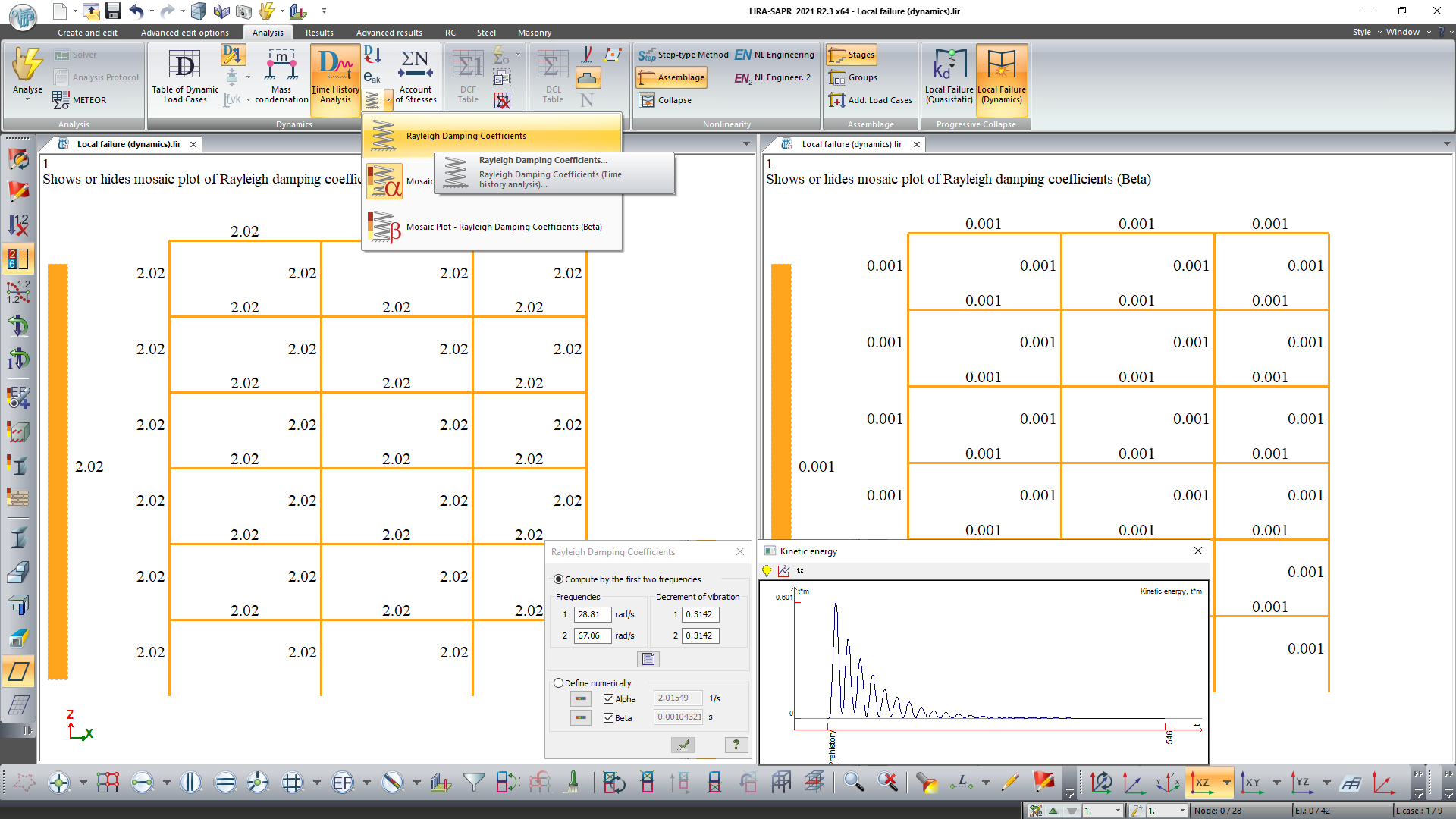
Rayleigh damping enables you to take into account that buildings and structures may dissipate energy due to material damping when a structural element is removed (analysis on progressive collapse in a dynamic nonlinear statement by direct integration of the equations of motion in time). The Rayleigh damping coefficients may be calculated automatically by specified frequencies and vibration decrement.
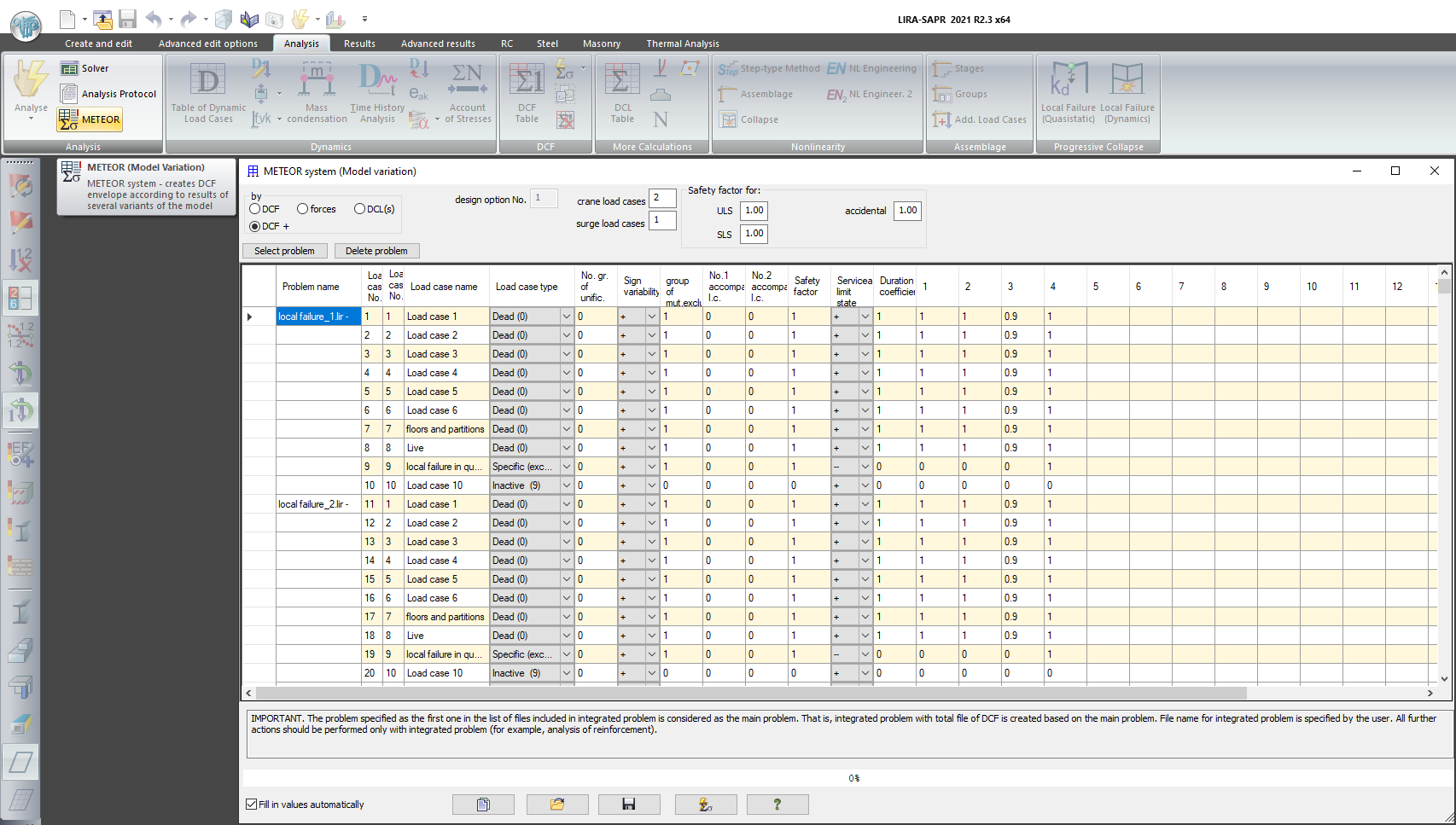
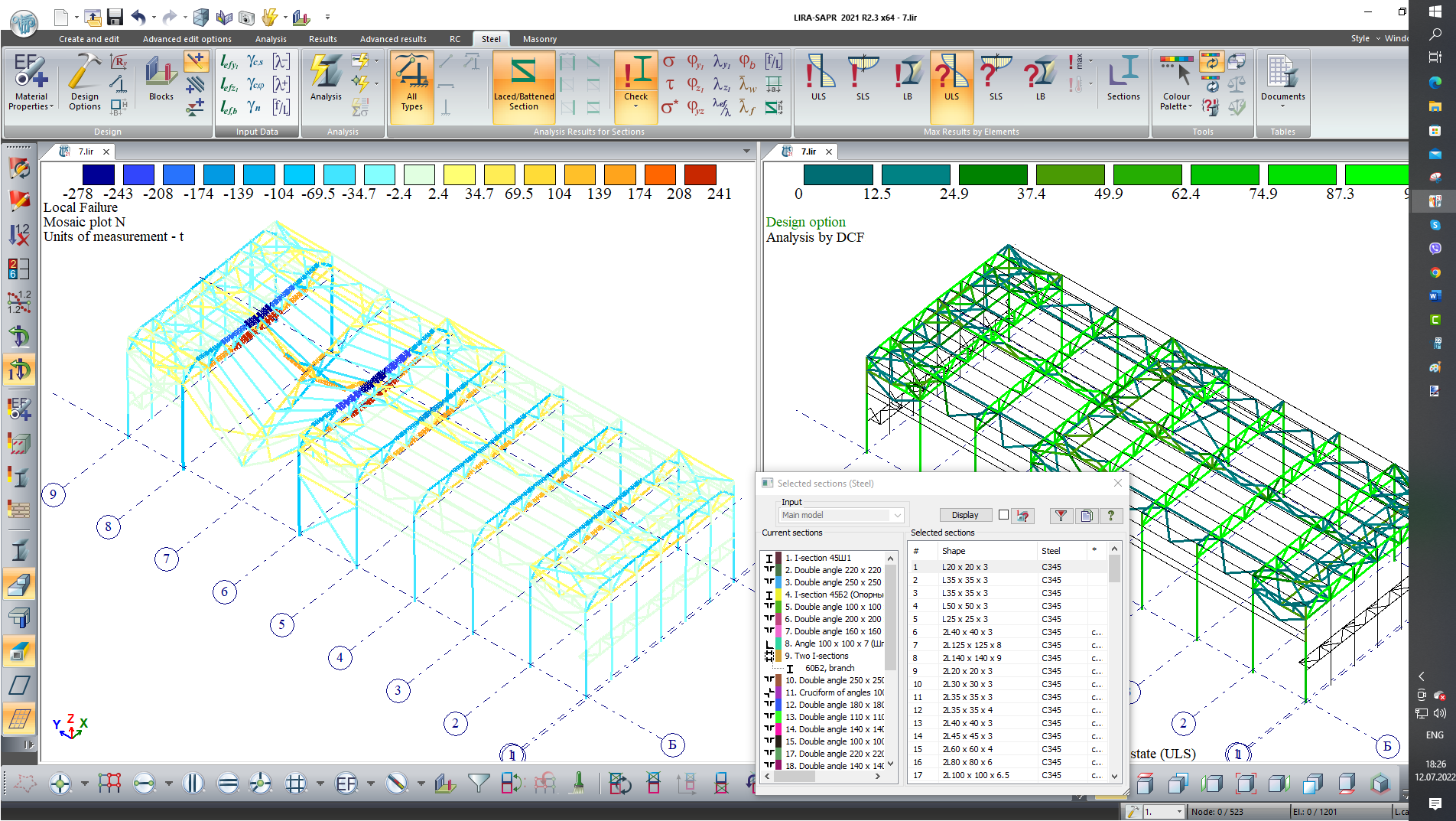
Forces computed in all elements of the model are available in output data. These forces may be used for structural analyses. For linear and nonlinear design models, it is possible to check the bearing capacity of sections, analyse reinforcement and select steel sections.
Thus, after numerical simulation it is possible to obtain a high-quality evaluation of the structure’s stability to progressive collapse, as well as to compare various collapse scenarios in order to identify the most unfavorable options (collapse).
If you have any doubt, download the Demo version and evaluate the program or contact our Support Team for more details.